Audit
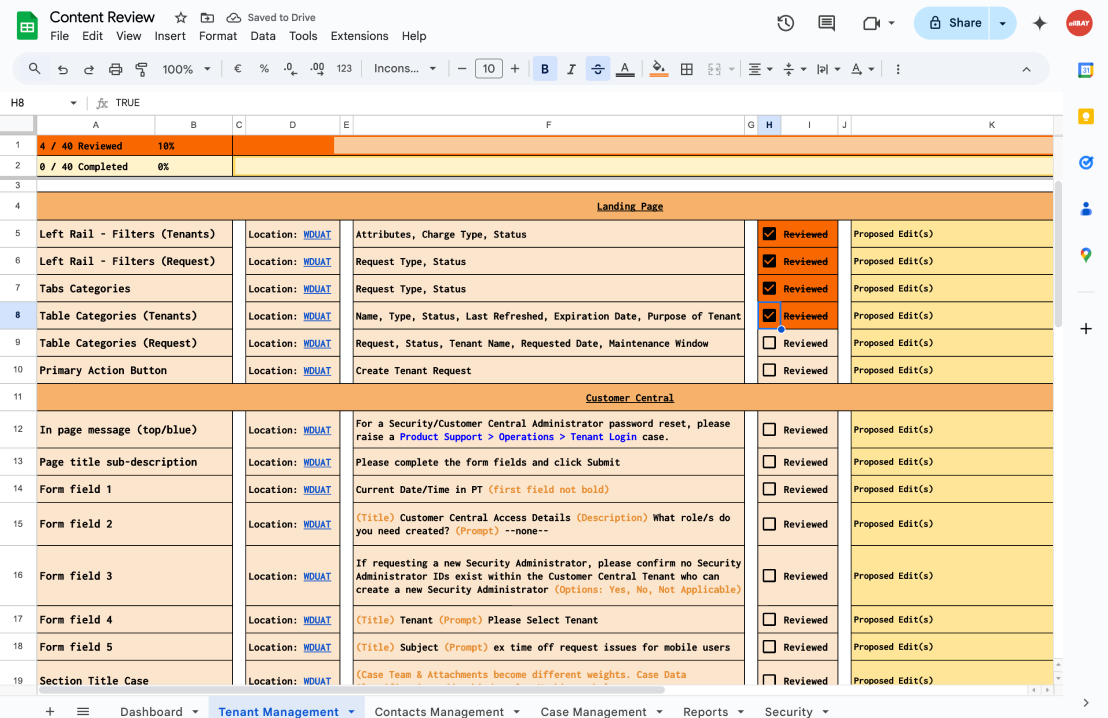
Find where patterns diverge across product areas and begin creating avoidable complexity for teams.
I’m a Platform and Systems Designer with about 10 years at Workday, focused on scaling UI architecture across 70,000+ product surfaces.
My work sits at the intersection of design systems, product, and engineering. The throughline is straightforward: reduce fragmentation, increase reuse, and turn platform investments into product adoption.
How framework work and embedded product work reinforced each other to create real adoption.
The decision lenses I use to standardize the right things, preserve the right flexibility, and create leverage across teams.
Two examples where local product problems became reusable system models that teams could adopt at scale.
At Workday, I split my time between building frameworks and embedding with product teams to drive adoption. The value of the role was not producing more artifacts. It was reducing fragmentation, introducing reusable models, and making sure platform work translated into real product implementation.
Defined reusable models, framework guidance, and architectural constraints that helped teams implement faster with less local reinvention.
Embedded with product teams so the system proved itself in real workflows, real constraints, and real shipping conditions.
Consumes Canvas guidance and turns it into reusable framework and pattern infrastructure.
My home team and the source of Canvas tokens, guidance, and pattern foundations.
Consumers of platform solutions in real product implementation.
In platform environments, the challenge is rarely inventing a new flow. It is deciding where standardization creates leverage, where flexibility still matters, and how to make the system easier for teams to adopt than a one-off solution.
Find where patterns diverge across product areas and begin creating avoidable complexity for teams.
Decide what should standardize, what should remain flexible, and where the system boundary should live.
Reuse proven primitives when possible so teams can build from the system instead of rebuilding locally.
Measure success by adoption, not just by how polished the first implementation looks.
Document the model so teams have a clear path to use it without reopening the same decisions.
Use roadmap visibility and org signals to target the most meaningful system gap.
Identify the relevant pagetype, layout, ownership seam, and product impact area.
Pull apart the flow into components, layout logic, and repeatable architecture.
Work with impacted teams so the solution addresses local needs while staying universal.
Iterate in product, validate with feedback, and refine the system under real constraints.
Turn the work into adoption guidance, implementation assets, and repeatable rollout paths.
To address growing complexity in case routing and delegation across Workday Support teams, I led research and strategy work that clarified scope, risk, and resource planning for a more scalable routing model.
More than 10 support teams across three time zones were managing delegation with inconsistent rules, language, and workflows, making routing behavior harder to scale and maintain.
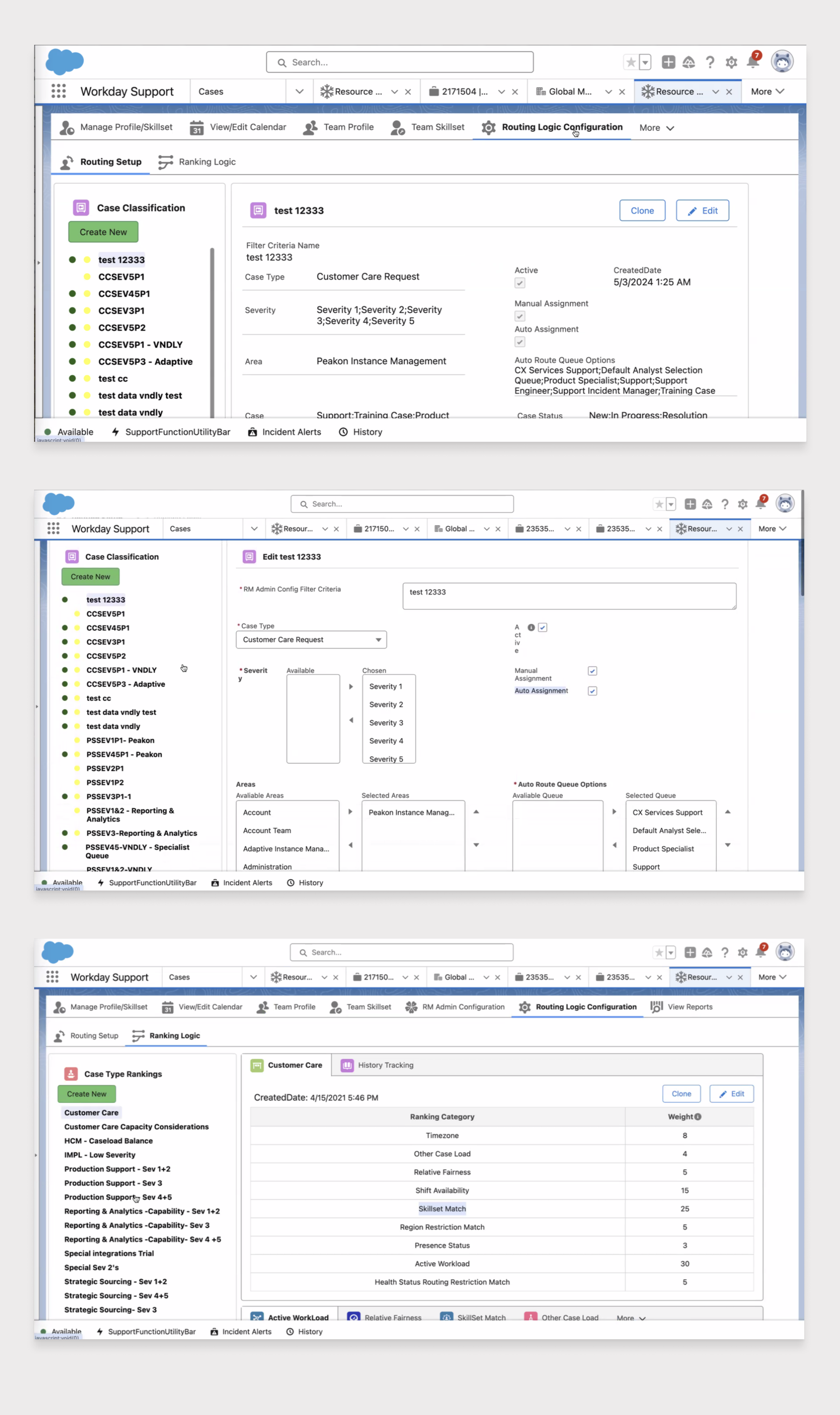
The case routing UI and logic had largely been managed by one contributor, while terminology and process expectations varied by team, increasing operational and scalability risk.
Delivery conditionBefore implementation planning, teams needed a common language and a clear sizing model to align scope, complexity, and resource requests.
Targeted sessions with Directors, Managers, and Analysts surfaced inconsistent routing expectations across regions, which made feature-level planning unreliable without framework alignment.
I translated findings into collaborative workshops and a shared deck that mapped enhancement options by effort, risk, and value so BSAs could frame realistic development asks.
I started by planning and running targeted discovery sessions to understand how teams delegated and received cases across regions and roles.
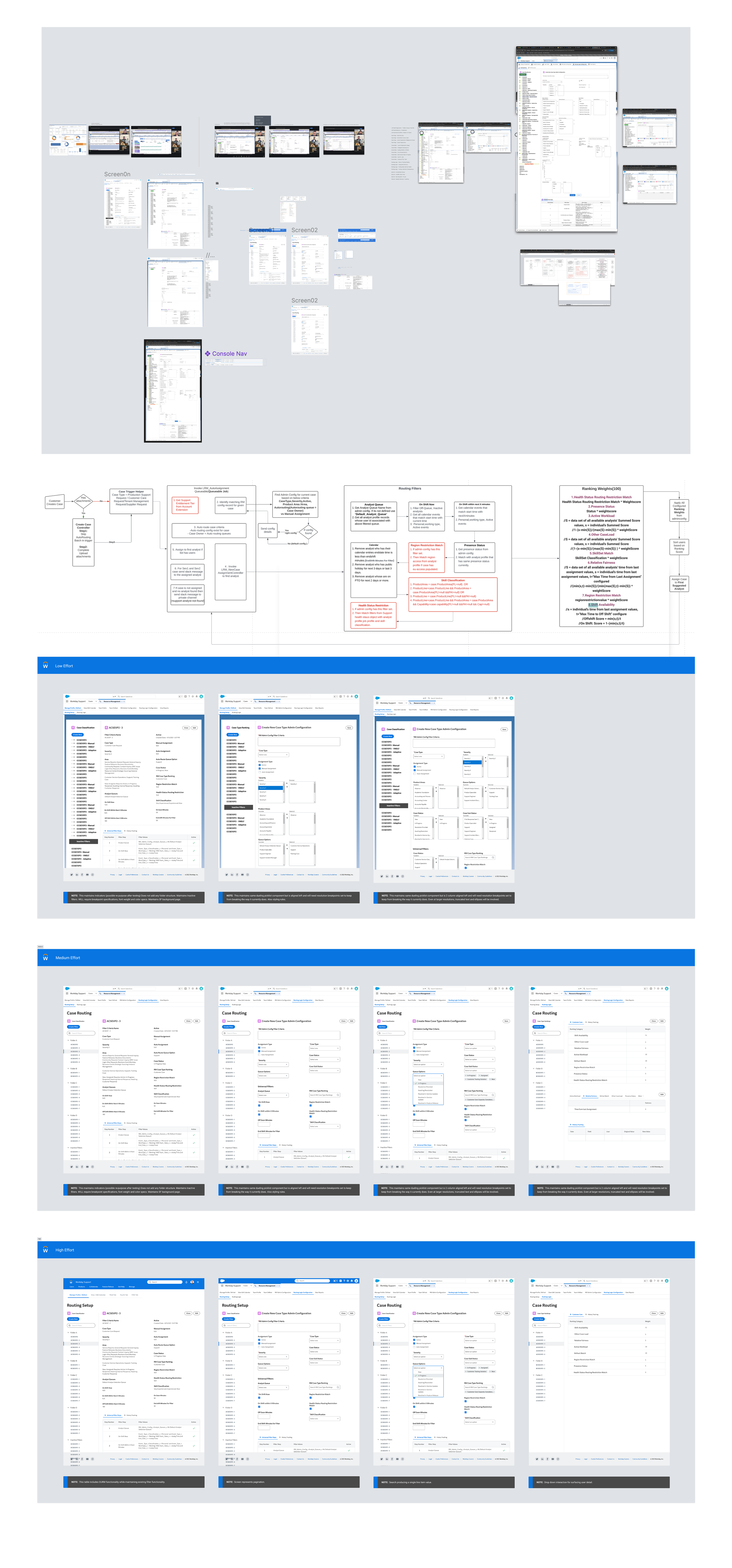
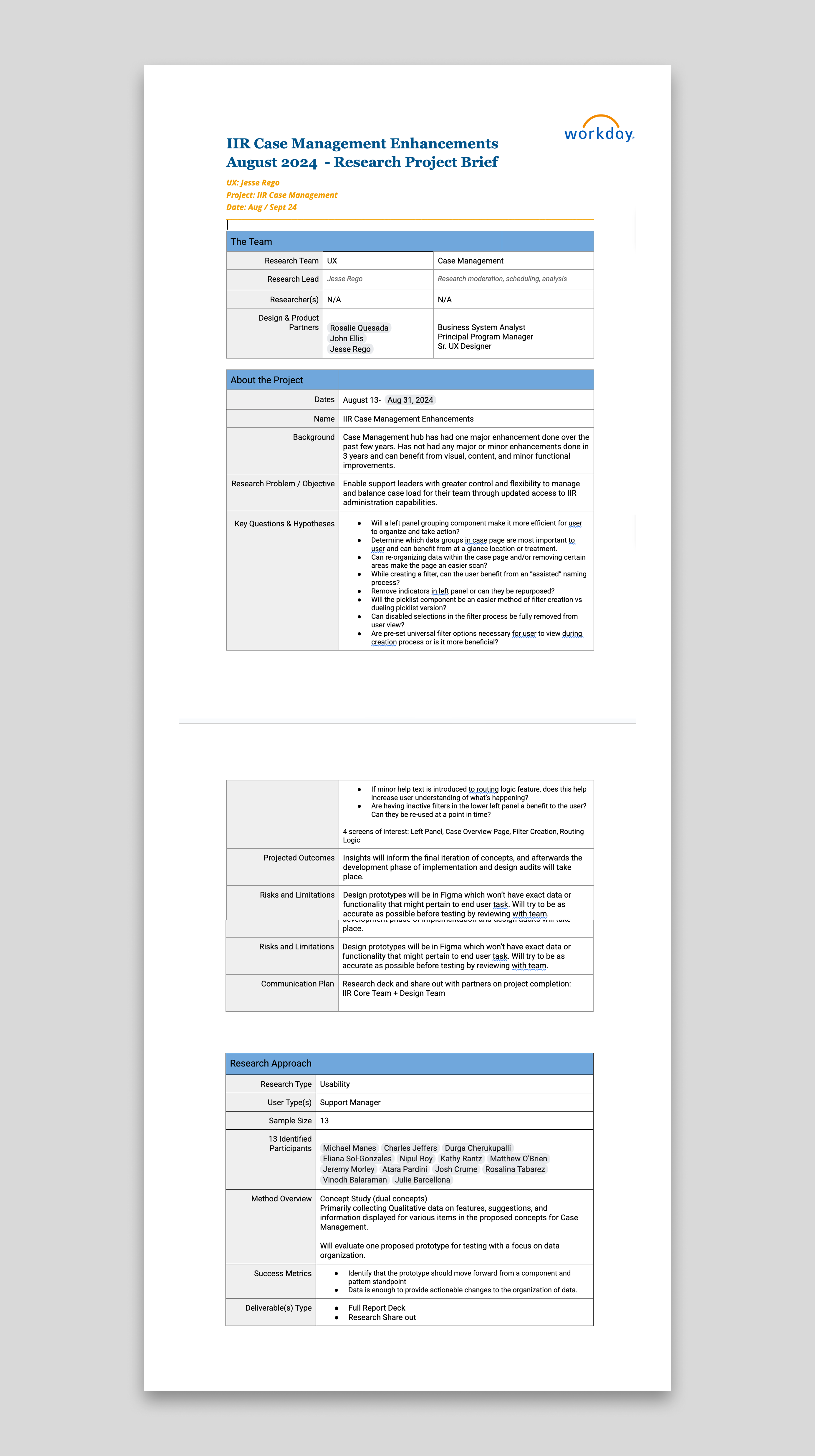
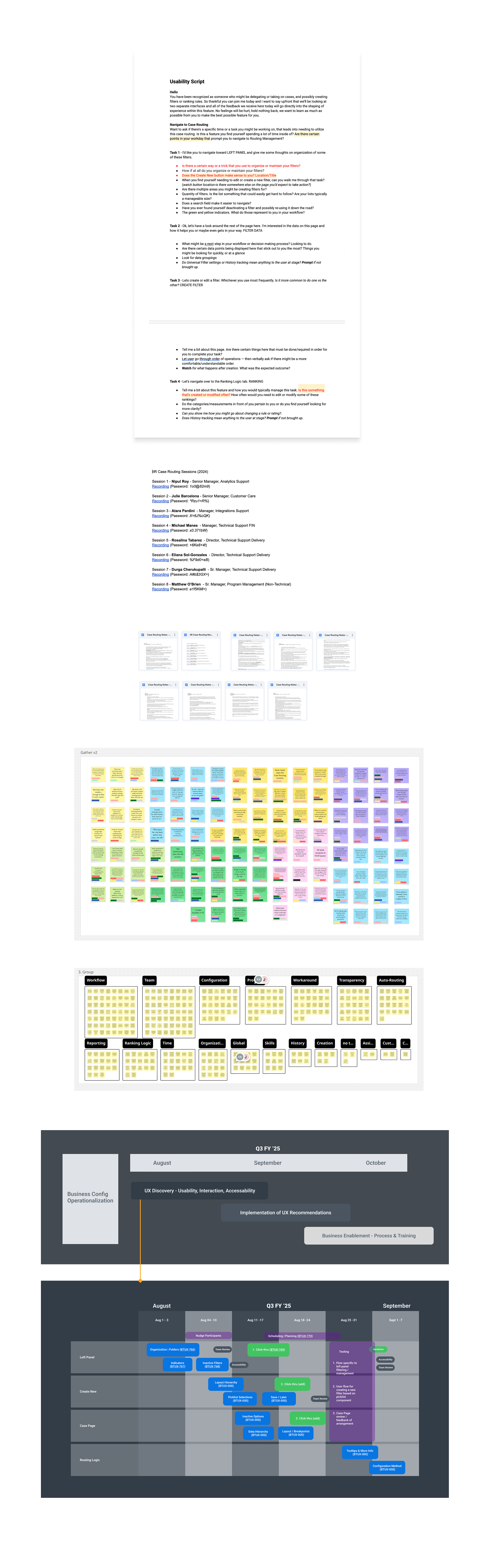
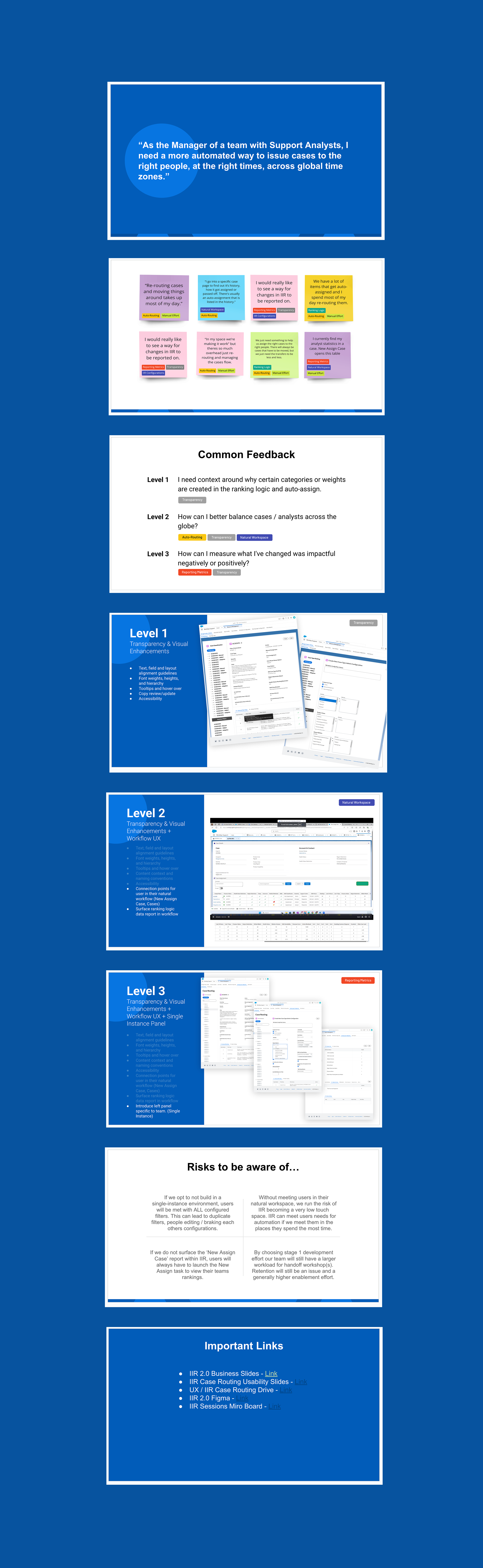
The work gave teams a clearer way to size engineering effort, align terminology, and prioritize enhancements for a more scalable case delegation system.
By aligning cross-functional teams on effort, vocabulary, and constraints, the initiative created stronger foundations for future routing investments and delivery confidence.
Customer Center was a mission-critical internal platform migrating from Salesforce Classic to Lightning. I led a phased strategy to unblock delivery, stabilize risk, and set up a reusable modernization model.
The migration allowed only modest UX updates to a product suite that had gone more than a decade without meaningful design work, so every decision had to balance modernization with timeline risk.
Team structure included 1 lead designer, 10 Salesforce developers, and 5 BSAs (principal and senior). The effort covered Contacts Management, Case Management, and Tenant Management.
Operating modelDesign lead plus program driver across product, business, and engineering rhythms.
Start with lift-and-shift fundamentals to reduce migration risk, preserve core behavior, and establish a Canvas-aligned foundation the team could confidently implement.
After stabilization, improve workflows, reduce cognitive load, introduce suggestive patterns, and feed contribution components back into the shared system.
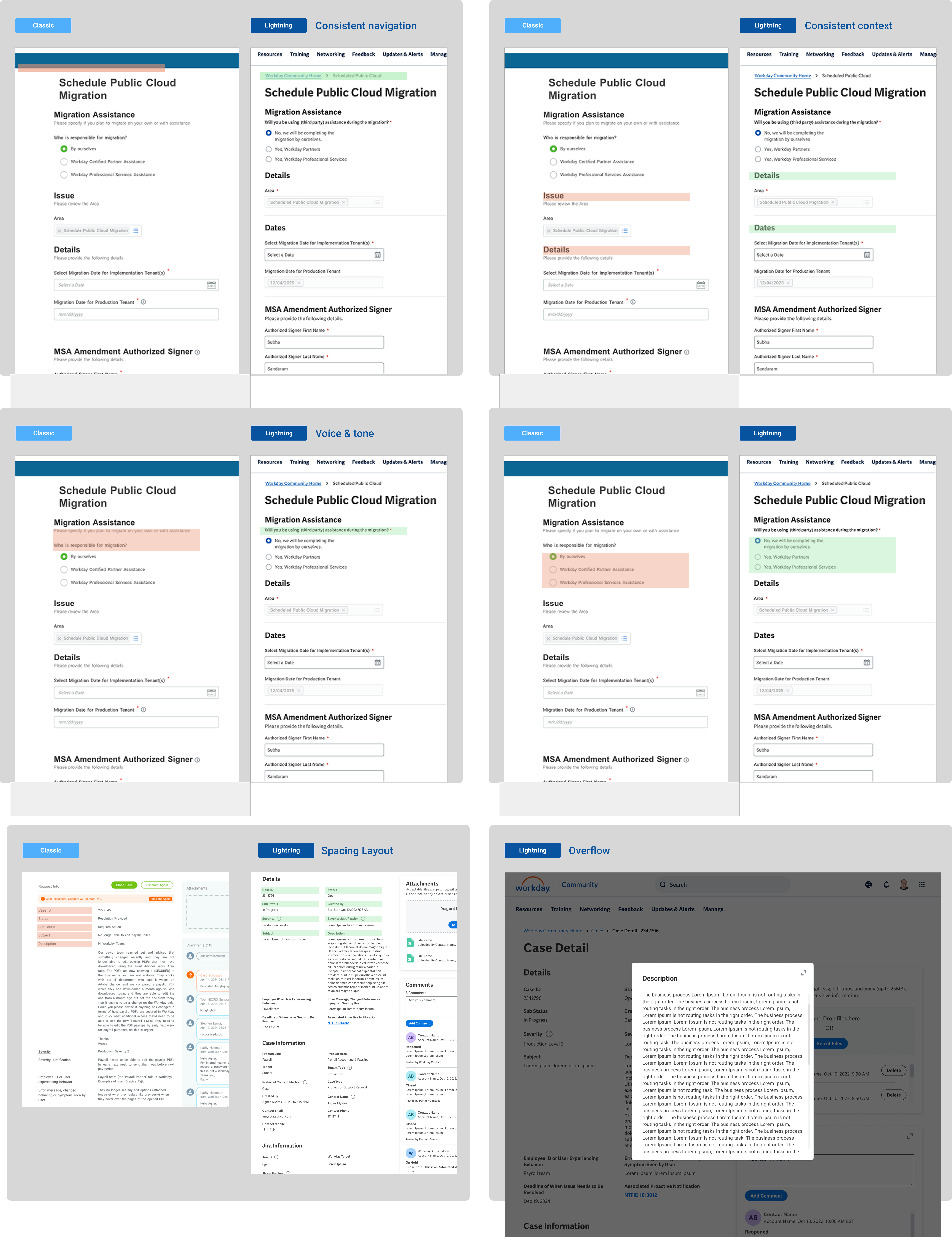
The first step was making migration quality measurable through side-by-side analysis between Classic and Lightning surfaces.
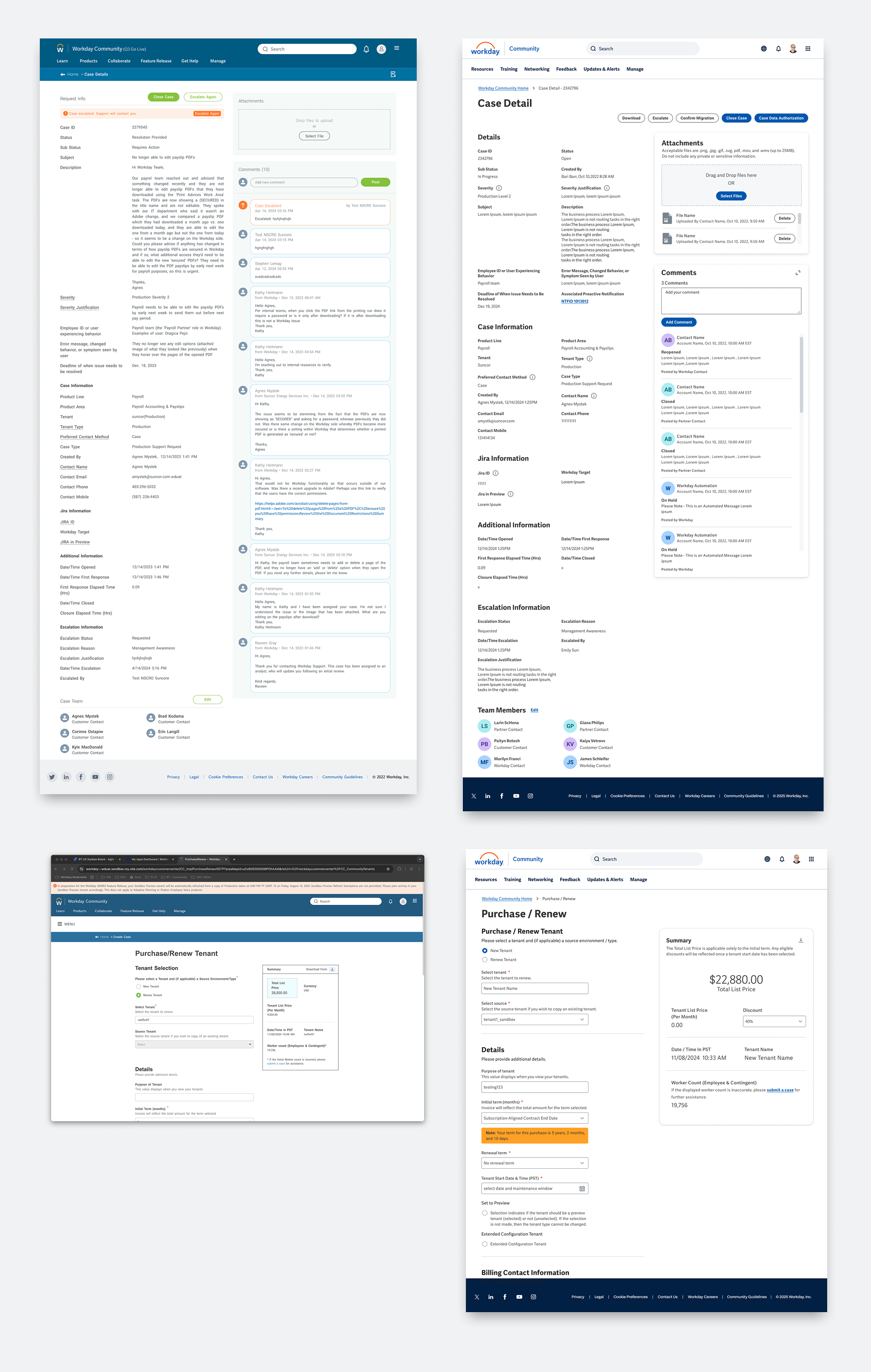
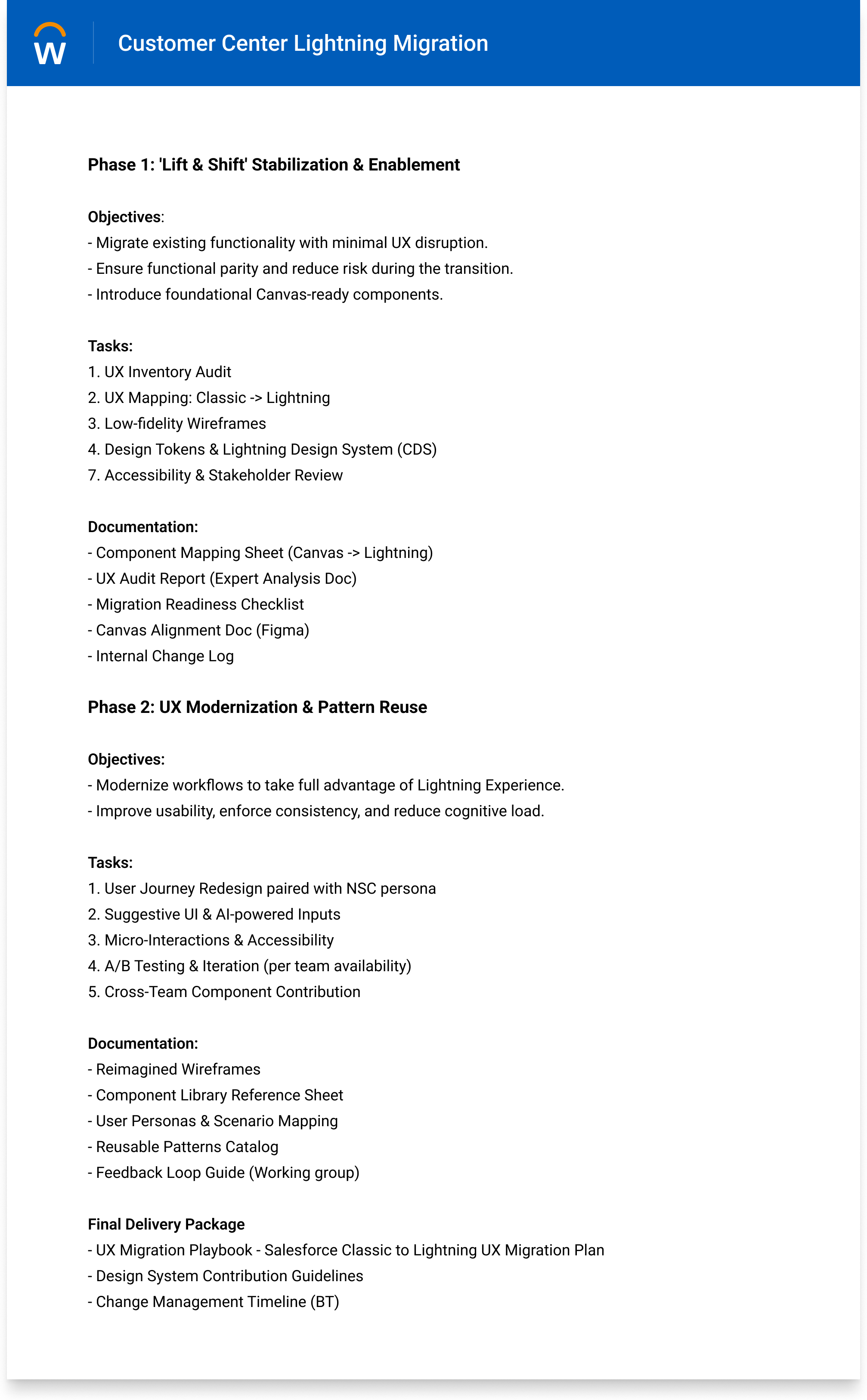
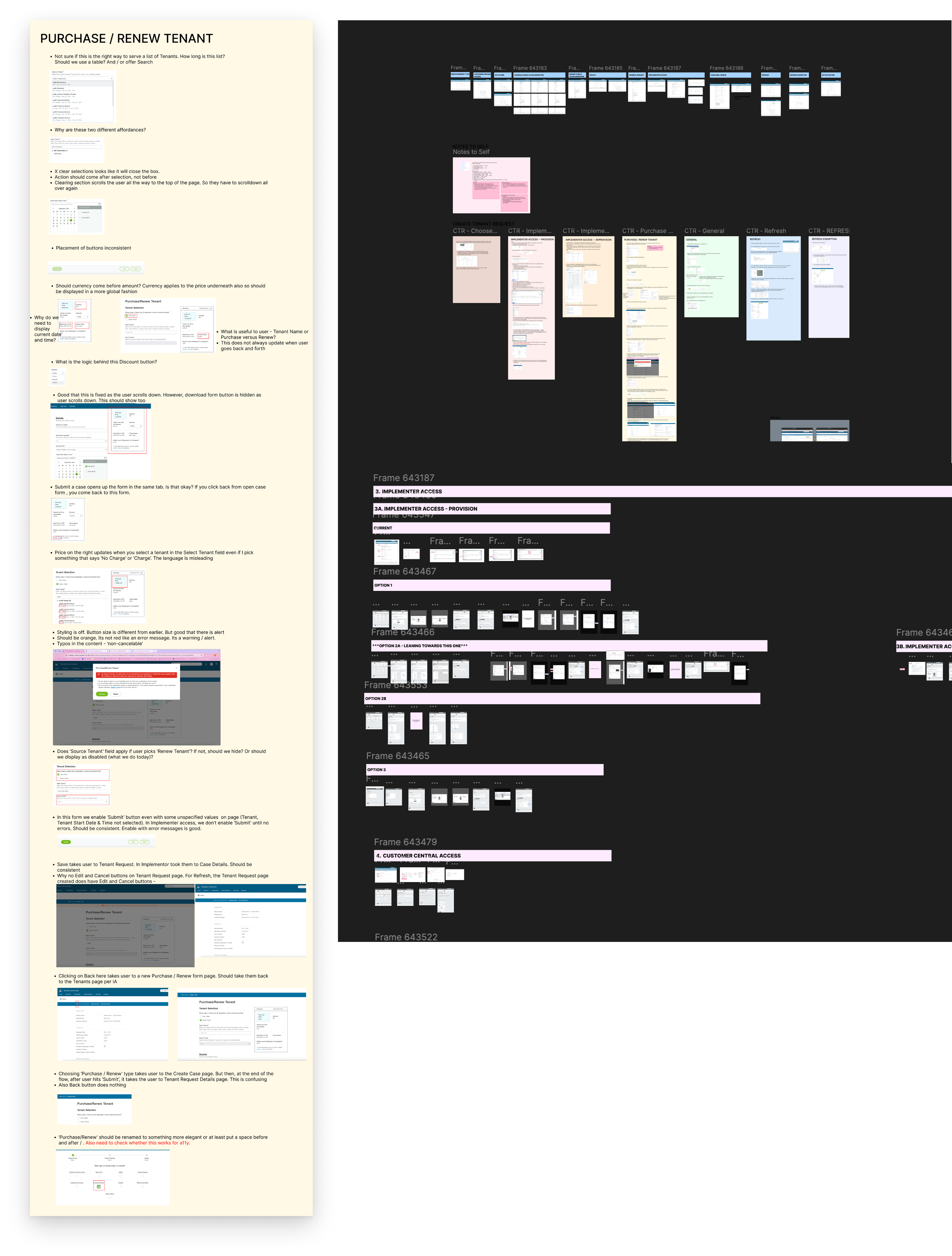
With migration stabilized, the work shifted into system contribution and reusable component strategy.
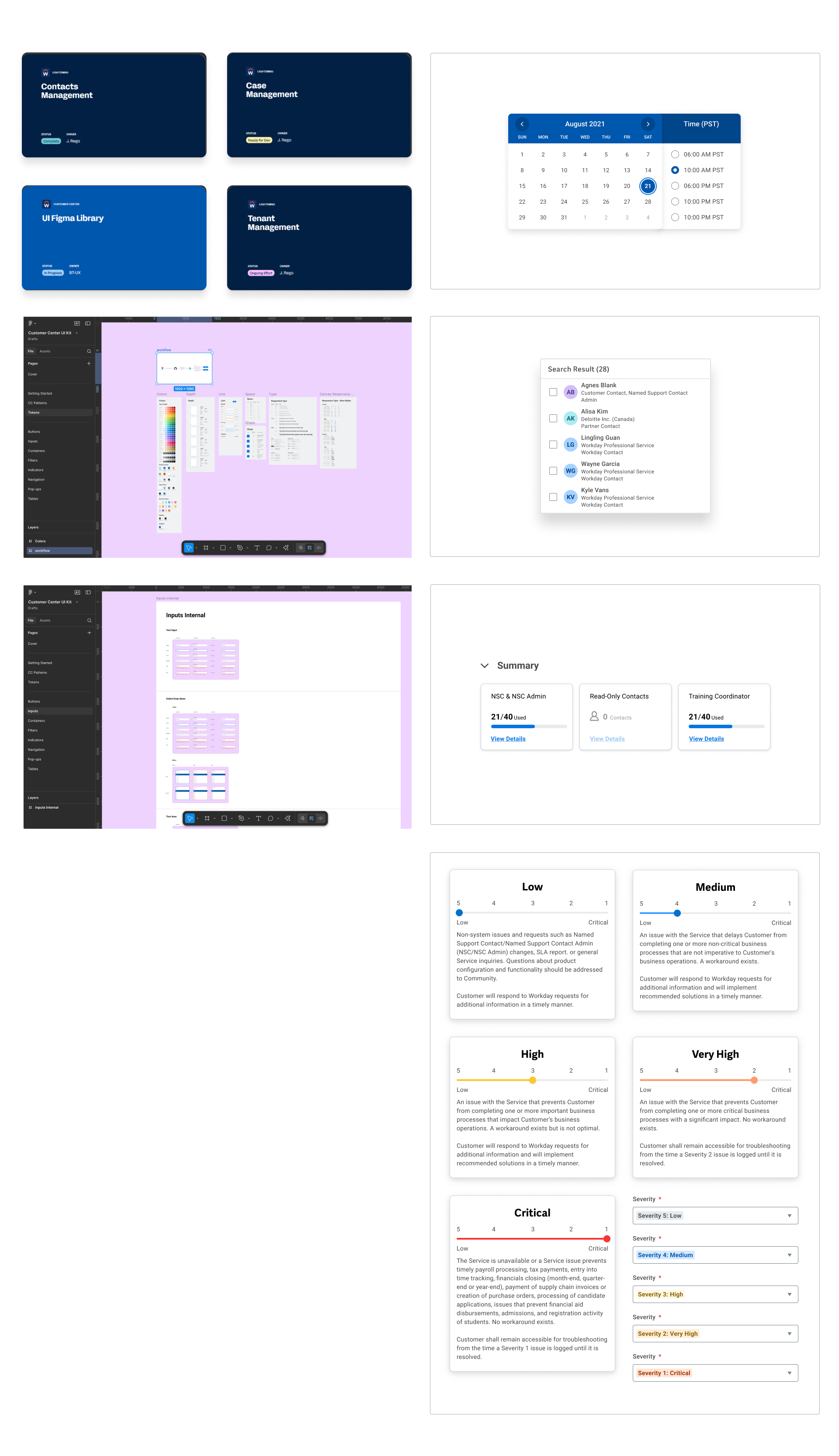
Execution held through an intentional communication cadence and handoff checks between business and development partners.
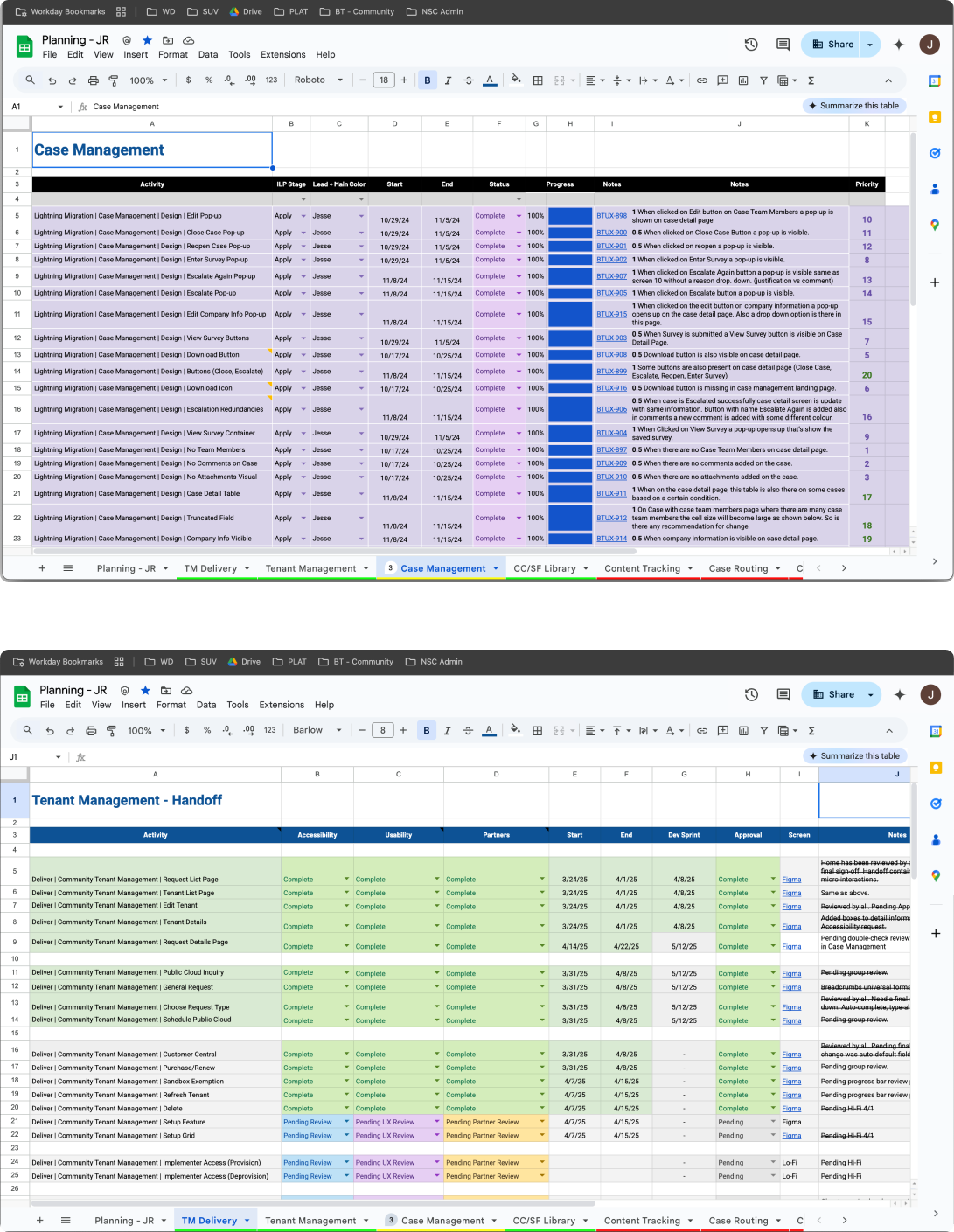
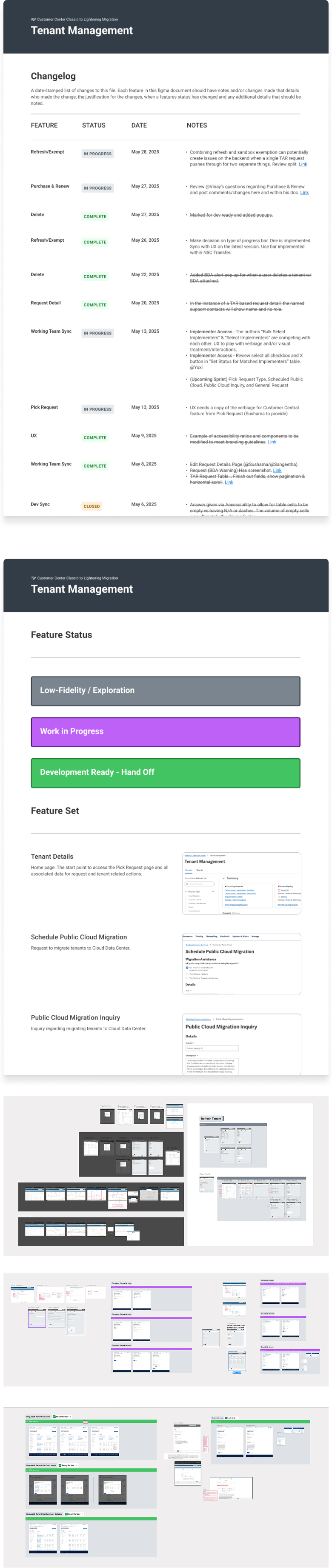
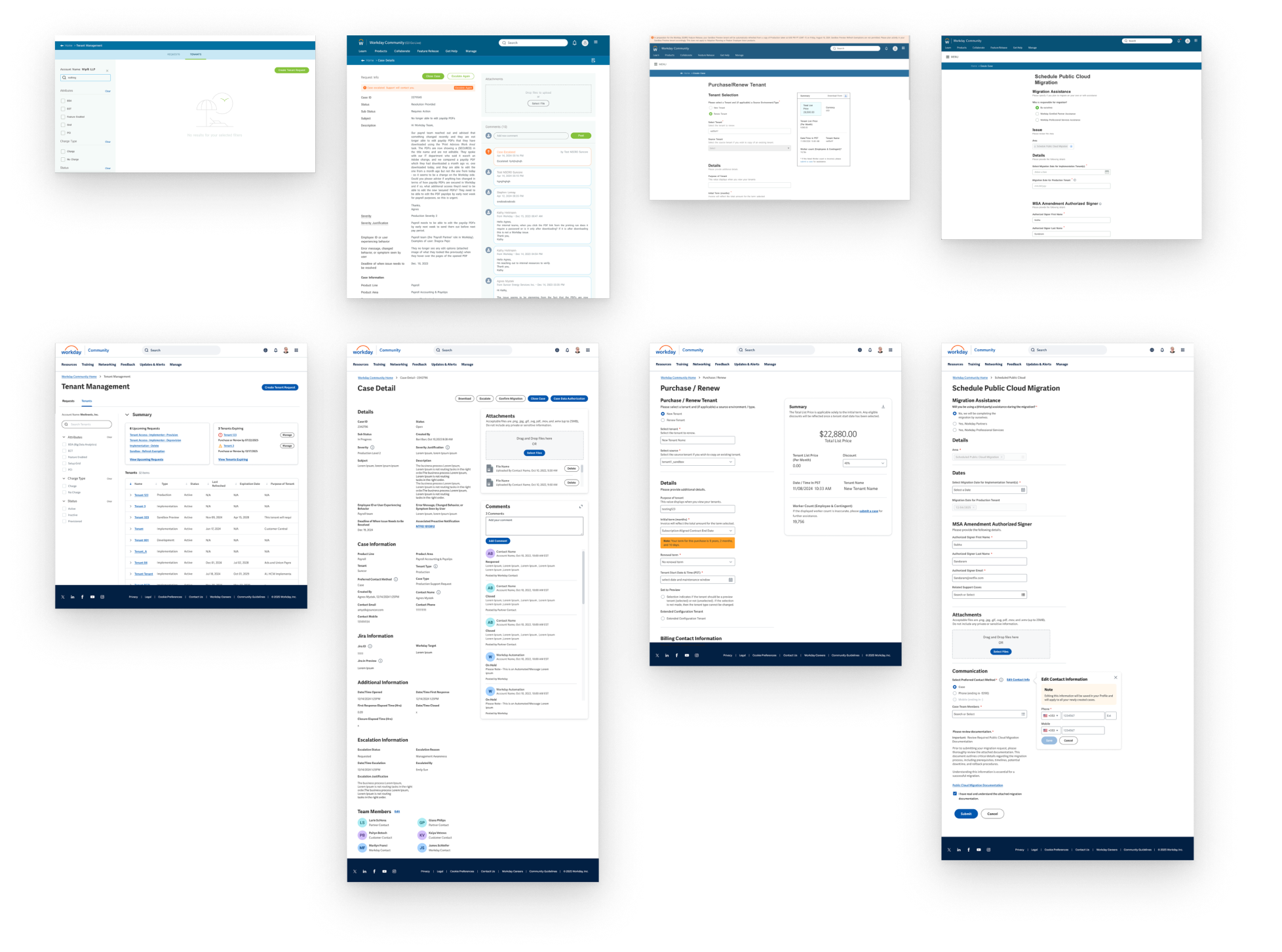
The two-phase model protected near-term migration goals while establishing reusable standards and components that future teams could build from.
Instead of stopping at compliance, the program produced a repeatable playbook that linked business cadence, design standards, and engineering execution.
Not by adding more components, but by defining the right constraints. The work I do best is identifying patterns that should exist, defining how they scale, and driving adoption across teams.
Worked inside a structural permissions framework where architecture clarity and product usability were tightly linked.
Connected platform structure to onboarding and implementation guidance so customers had clearer entry points into setup and configuration.
What continues to pull me toward architecture and systems design is the chance to make product teams more effective by giving them better primitives, clearer choices, and a stronger path to reuse. That’s the throughline of my work: defining systems that scale across teams, reduce one-off work, and turn platform decisions into product impact.